

Explore our expert insights into the dynamic biogas landscape and find out how our technology is playing a key role in changing how biogas is understood
Biogas And Beyond
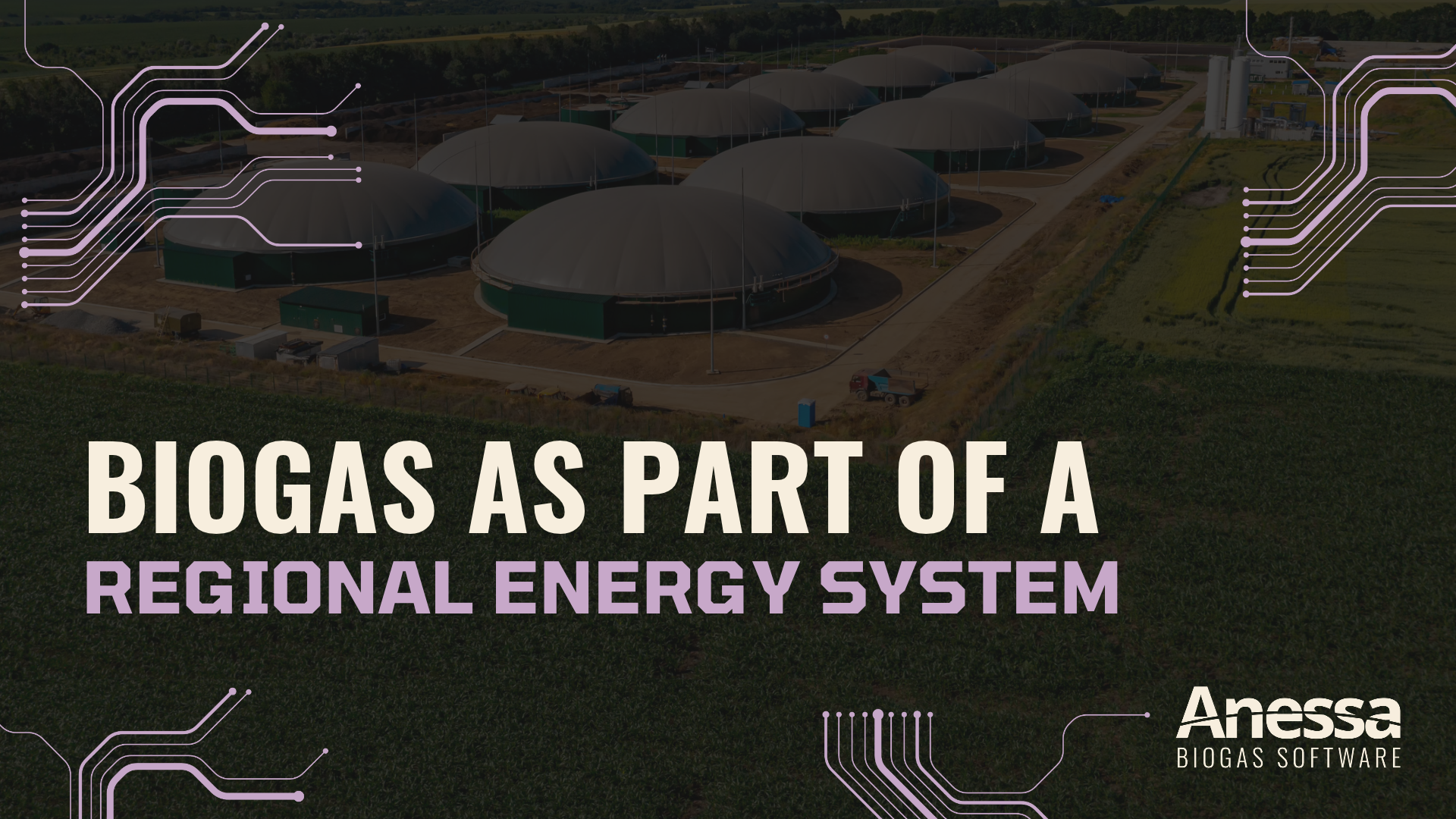
Scaling Biogas for Regional Clusters
Standalone biogas plants carry every cost on their own, from biomethane upgrading to feedstock logistics. As the industry scales, regional biogas clusters let plants share that infrastructure and turn it into value across an entire region. Here’s why clustered biogas is the next stage of renewable energy, and how Anessa’s digital twin software helps operators manage it.

Risk, Revenue and Long-Term Contracts
Negotiating offtake agreements is complex enough. Pair that with an RNG market that evolves day by day, and you’ve got a long list of expectations and reliability requirements, with a continuous stream of data, that need to be met before contracts are finalized. Anessa Suite is the analytics layer that streamlines this process of connecting data to reports that show consistency, reliability, transparency, and build confidence in investors and buyers.

Managing CI Scores Starts Inside the Digester
Carbon intensity is usually treated as something calculated after the production cycle ends. It is treated as a reporting number in quarterly reports once the decisions are made. Find out what changes when CI is managed inside the plant during the production process. What changes when it is tracked alongside gas yield and uptime, shaped by feedstock blends and energy use and then tied directly to credit revenue.

Why the “Best” RNG Plant Isn’t Always the Biggest One
Traditionally, the success of biogas and RNG plants was measured by the highest production volume.
However, as the industry matures, volume isn’t the only factor driving plant success. Other complex factors like consistency, stability, and predictability are highly valuable for the commercial success of biogas plants.
How do these factors play a role in plant success?

Running One Plant Is Hard. Running Ten Is a Different Game.
As operators scale from single-site projects to multi-plant portfolios, the questions start to change from "how do we optimize this plant?" to "how do we optimize the entire portfolio?"
Discover why portfolio thinking, not just plant-level optimization, is becoming essential for operators managing multiple AD facilities and how digitalization paired with local expertise is reshaping capital allocation, feedstock distribution, and long-term bankability across the industry.

Managing Variability Without Losing Stability
Variability has become part of modern AD operations. The biogas plants that succeed long term will not be the ones chasing perfect conditions. They will be the ones prepared to operate effectively through changing conditions.
Maintaining stability today is less about eliminating change and more about understanding how to navigate it before problems begin to surface.
And increasingly, that comes down to having the right visibility, the right tools, and the ability to make smarter decisions before instability takes hold.

From Dashboards to Decision Engines
The transition from dashboards to decision intelligence will not happen overnight.
Many plants still rely heavily on traditional monitoring systems, and experienced operators will always remain central to successful plant management.
The plants that perform best in the future will likely be those that combine human expertise with smarter digital tools, allowing operators to make faster, more informed decisions

Designing Biogas Plants That Can Adapt, Not Just Operate
The industry is maturing. Biogas is no longer experimental infrastructure. It is a long-term energy infrastructure. And infrastructure must endure change. The plants that thrive will not simply operate well. They will adapt well.
And in a world where markets, policies and climate are all evolving, adaptability may be the most valuable design feature of all.

Climate Variability & AD Performance
Anaerobic digestion doesn’t operate in a vacuum. It operates in fields, on farms, beside food processors, near cities, in environmental conditions that are becoming less predictable every year. With the help of Anessa AI define the next generation of resilient, profitable AD systems

Why the Most Bankable Biogas Projects are Designed for Change
The most bankable biogas projects of the next decade won’t be the ones with the best base-case IRR on day one. They’ll be the ones designed to absorb uncertainty, adapt to change and evolve with markets, policies and feedstocks over time.

2025 Year in Review: A Year of Growth, Innovation, and Global Impact for Anessa
In a year where the biogas and RNG industry accelerated its push toward smarter, more reliable project development, 2025 marked a defining chapter for Anessa. With major recognitions, expanded global presence, and growing adoption of our advanced modelling platforms, Anessa strengthened its role as the industry’s leading provider of predictive analytics and digital intelligence.

AI and Biogas in a Decentralized Energy Future
By combining biogas monitoring, predictive analytics and intelligent feedstock planning, facilities shift from reactive operations to proactive, optimized performance. In a decentralized energy future, biogas plants equipped with Anessa AI will evolve into intelligent, flexible assets capable of supporting local grids in real time.