How Does Biogas Help
Manage Waste?
Organizations involved in waste management require an environmentally conscious approach to convert unavoidable organic waste into renewable energy and an additional revenue stream. Biogas is the solution for that.
“As the world population grows, waste will grow, and it is up to us to use our resources effectively. AD & Biogas is an excellent solution for that, especially when paired up with tools like Anessa.” - Biogasworld
Biogas offers waste management organizations a scalable way to convert different streams of organic waste, municipal solid waste, wastewater sludge, livestock manure and commercial organics into renewable energy, reduced disposal costs, and new revenue streams.
Landfill Operators丨Muncipal Waste丨Waste Corporations
Turning Organic Waste into Reliable Energy and Circular Value
The Biogas Impact
~0.3-1 tonne CO₂e↓
methane emissions avoided for every 1 tonne of organic waste diverted to biogas

Organic fraction =
30-50% of MSW
diversion to biogas can extend landfill life and delay the need for new landfill development
10,000-50,000 MWh/year
energy potential from a Municipal facility
(1 tonne MSW organics → 100-150 m³ biogas )

$75-$200 /tonne
potential value from combined revenue streams
(tipping + energy + credits)
Why Invest in Biogas Now?
According to data from the American Biogas Council, over 1,200 of the 16,000 wastewater treatment plants in the United States use anaerobic digestion (AD) to produce biogas from wastewater sludge, but only 4% convert it to RNG.
Biogas enables waste management organizations to transform organic waste from a liability into a strategic asset. By diverting waste from landfills and wastewater systems into anaerobic digesters, organizations can significantly reduce methane emissions while generating renewable energy efficiency in the form of electricity, heat, or RNG.
This shift not only extends landfill life and reduces the impact on climate change but also creates a circular system where waste is continuously converted into energy and usable byproducts.
→ The biogas produced can be used for generating power and electricity for the plant facilities.
→ The excess can be processed into renewable natural gas (RNG).
→ RNG can be sold to the grid & injected directly as. renewable fuel.
→ This lowers the greenhouse gas emissions and improves carbon intensity scores.
At the same time, growing regulatory pressure and ESG requirements are driving the need for measurable emissions reductions and sustainable waste solutions.
In practice, biogas production is not just waste treatment; it is a data-driven approach to resource recovery, compliance, and long-term cost optimization.
These outputs fall under the umbrella of sustainable energy boosting ESG Compliance.
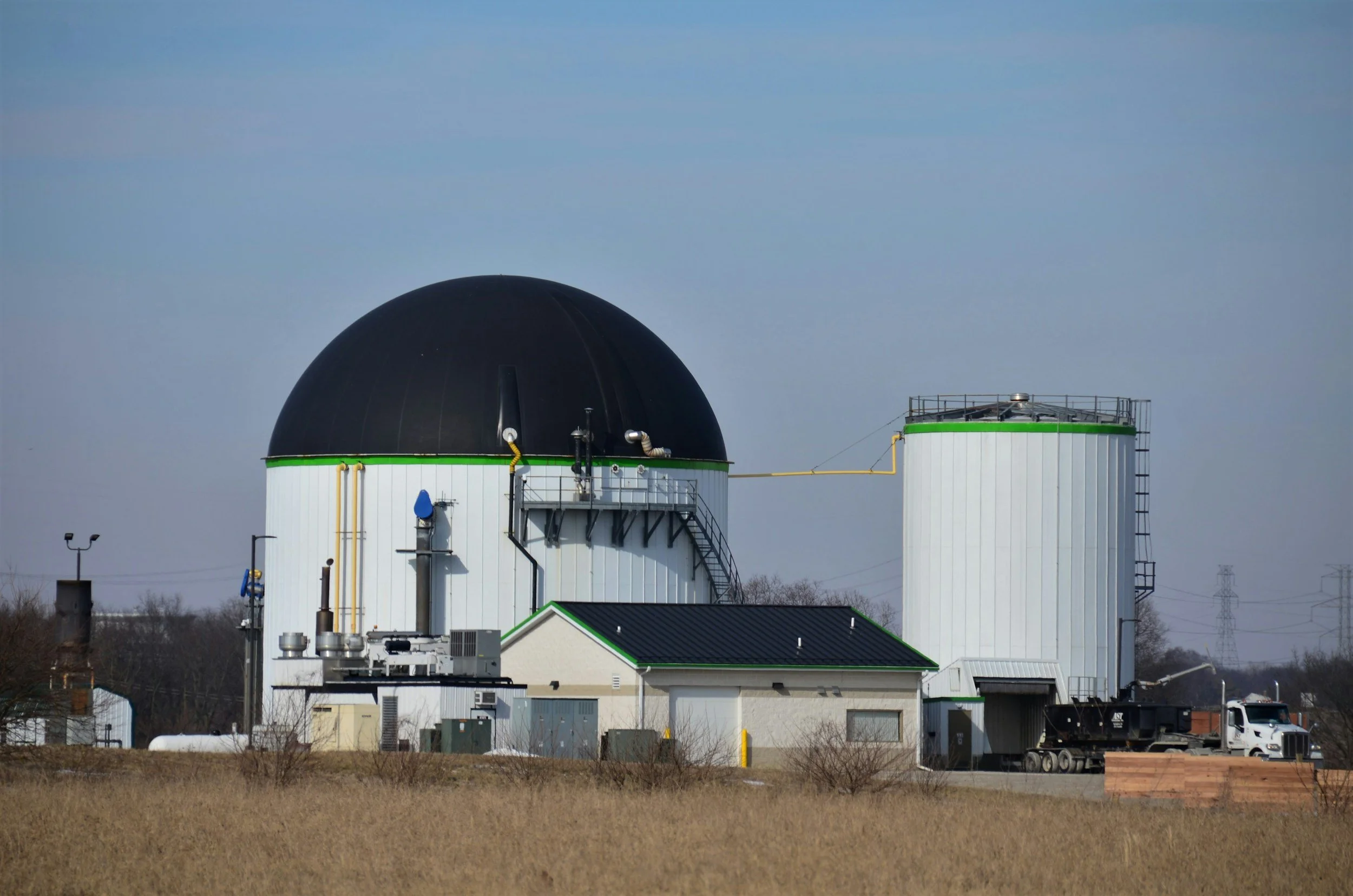

Starting successful biogas plants requires an in-depth analysis to understand
the type of organic waste with the facility and the biogas plant's needs.
The Challenge: Variability, Contamination, and Compliance Risk
Waste streams are inherently complex. A mismatch between feedstock characteristics and digester technology can significantly increase operating costs. Differences in composition, contamination (plastics, packaging), and seasonal variability can significantly impact digestion performance, gas yield, and equipment reliability.
Without proper analysis, projects often face unstable operations, higher costs, and regulatory challenges. Key questions are difficult to answer with confidence:
How will different waste streams perform in digestion over time?
What is the true energy recovery potential across facilities?
How can contaminants impact operations and downstream upgrading?
How do operational outcomes align with emissions targets and compliance?
Many projects still rely on generic assumptions and historical averages, leading to overestimated yields, unexpected downtime, and missed revenue opportunities.

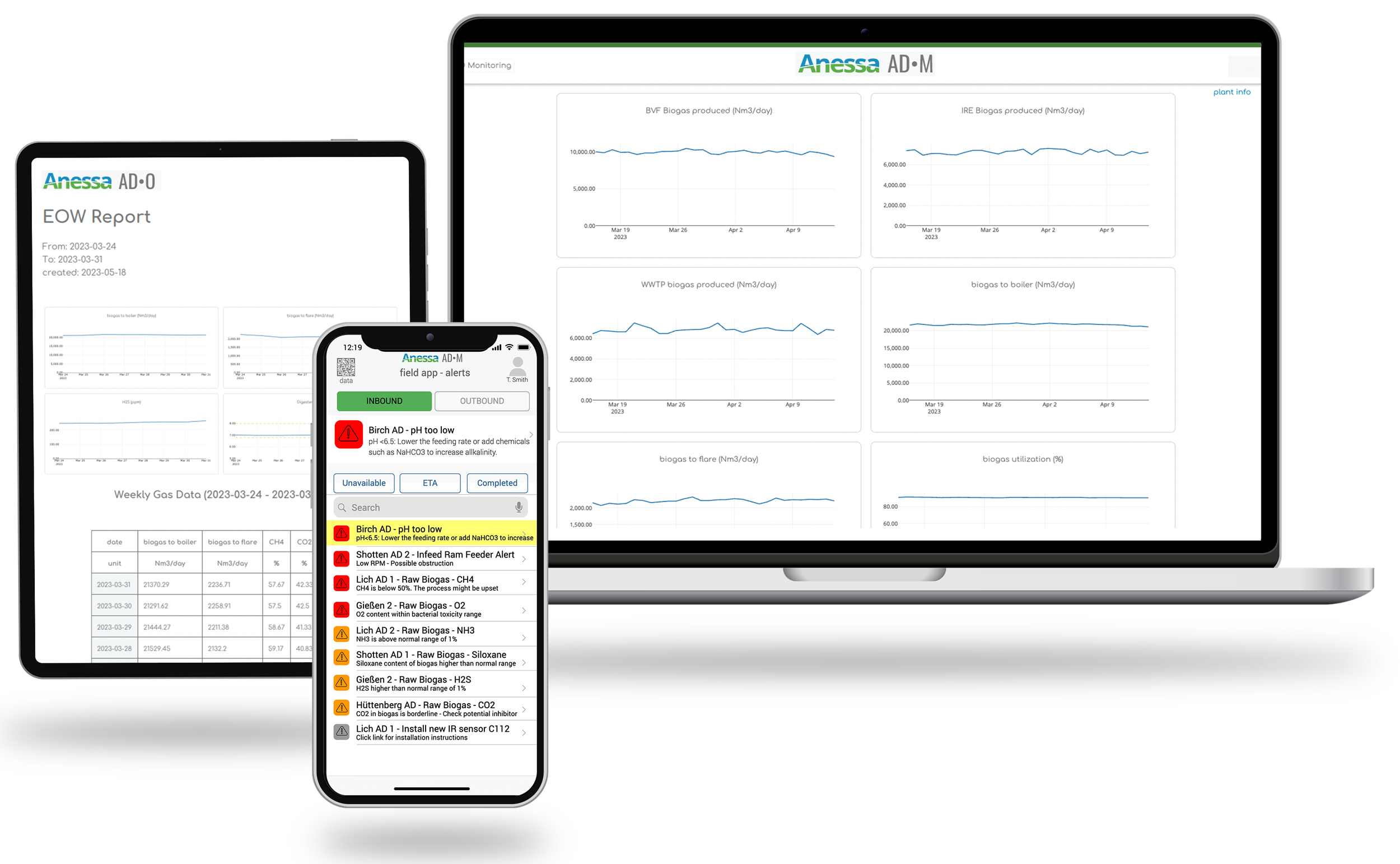
With our extensive repository, Anessa Suite is equipped to ensure that frequently asked questions are answered and help plant operators maximize asset utilization and longevity.
How Does Anessa Help?
Anessa enables waste management organizations with AI-powered modeling and digital twin technology to manage complex, variable waste streams and convert them into stable energy outputs.
As projects advance, Anessa enables feedstock routing, blending, and system optimization, ensuring that different waste streams, municipal organics, sludge, and commercial waste, are processed efficiently.
AI-driven optimization adapts to seasonal variability and contamination risks, improving digestion stability and maximizing energy recovery.
The result is a system that reduces landfill dependency, improves operational efficiency, and maximizes value from waste streams.
In addition to protecting against the identified issues, this all-encompassing approach unlocks long-term profitability, guaranteeing that biogas projects remain resilient, compliant, and financially viable in a rapidly changing regulatory environment.