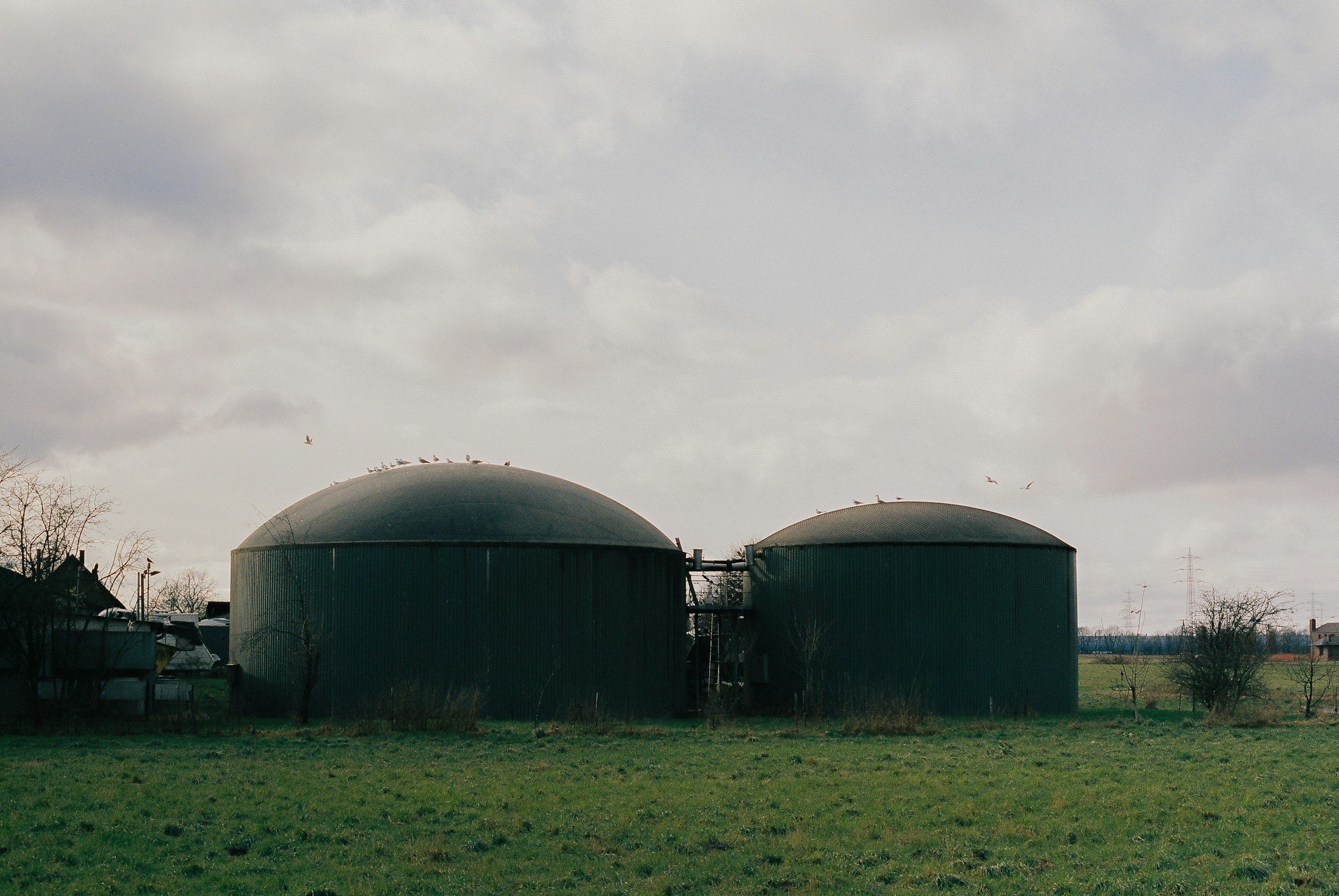
What does Biogas mean for Agricultural Stakeholders?
Biogas upgraded with Anessa transforms farm waste into a well managed opportunity.
Farmers丨Agricultural Cooperatives丨Farmer Unions丨Agribusinesses
Turning Farm Waste into Predictable Energy and Revenue
Waste and manure management are unavoidable operational costs. By using livestock manure, crop residues, food waste and other organic waste, farm biogas production can be used for heating, energy generation, or on-site electricity.
It lowers carbon dioxide emissions, and excess energy can be sold.
Biogas enables farmers to turn these necessary costs into an additional source of income without altering their core operations.
Biogas presents an opportunity to manage waste by generating value from readily available agricultural waste content.
The Biogas Impact
$50,000 to $150,000
Savings per year in potential Fertilizer Offset for an average-sized farm.
(actual figures depend on land base & nutrient use efficiency)
500 to 1500 MWh/ year
Usable energy produced by mid-size farm digesters
120-180 kWh
Energy produced on-site & exported for every tonne of manure converted to biogas
(20-30 m³)
20,000 to 80,000
GJ/year
Potential Farm to RNG system benefits
What is Biogas?
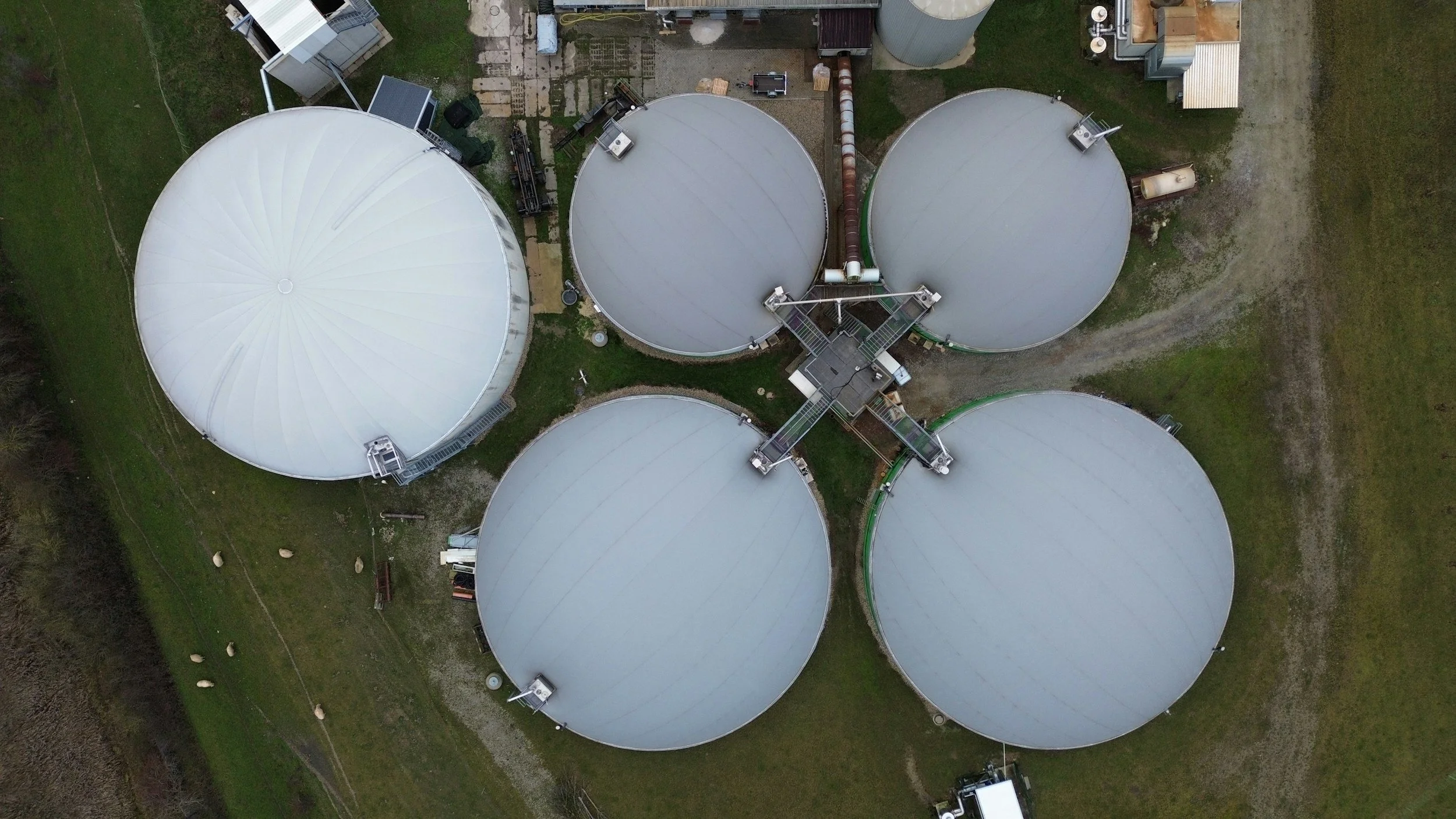
Biogas is produced inside sealed tanks called anaerobic digesters in a process known as Anaerobic Digestion (AD). During the digestion process, microorganisms (bacteria) break down organic waste materials (also called feedstock) in the absence of oxygen, producing a mixture of mostly methane gas and CO2, leaving behind solid waste called digestate. When an agricultural producer processes biogas the resulting digestate can be used as natural fertilizer.
How does biogas benefit you?
By converting waste into heat, electricity, or renewable natural gas (RNG), farms can diversify income while reducing dependence on volatile fertilizer and energy markets. Digestate reuse further closes the nutrient loop, lowering input costs and improving soil health, while reducing greenhouse gas emissions and strengthening overall farm sustainability.
Our NPK analysis reveals that partnering with Anessa results in Digestate with a higher nutrient concentration, with 60–90% of nutrients recovered from feedstock.
In practice, the biogas produced is not just about energy production; it is about optimizing the entire farm system.
Biogas can be further processed to the same quality as natural gas and injected into the gas grid. This renewable natural gas (RNG) can be sold, providing farms with access to new revenue streams supported by existing energy businesses and policies.
Thus, energy generated from biogas systems can power not only the farm but also nearby houses and surplus can be sold as a renewable fuel to the grid.
While the benefits are clear, starting a biogas project can often feel overwhelming for individual farmers.
Despite the opportunity, most agricultural biogas projects struggle before they even begin.
Key questions, such as the right plant size, realistic gas yields, true ROI under changing policies, and operational impact on the farm, are often difficult to answer confidently.
Feedstock variability, digestate management constraints, and complex permitting requirements add further risk. As a result, many decisions are still based on static assumptions and generic benchmarks, leading to overdesigned systems, underperformance, or stalled projects.
Anessa Suite is designed to optimally answer these for you from day one
How does Anessa help?
Anessa equips you with AI-powered modeling, simulation, and digital twin technology to evaluate and manage biogas projects with confidence. It helps you understand whether biogas makes sense, how different waste affects gas production, and how to reduce risks over time.
From initial feasibility, farms can model real feedstock availability, estimate energy production, and test financial outcomes before committing capital.
As projects advance, detailed simulations, including mass and energy balances, nutrient flows, and financial sensitivity, enable bankable, investment-ready designs.
During operations, AI-driven optimization improves feedstock blending, predicts seasonal variability, and stabilizes performance. All while real-time monitoring and anomaly detection ensure continuous efficiency gains.
This results in a shift from uncertainty to control, helping farms avoid common pitfalls such as oversizing systems, overestimating yields, or misaligning projects with farm operations, while delivering clear ROI visibility, reduced risk, improved nutrient management, and stable long-term revenue streams.
We help you to confidently evaluate the biogas opportunity, understand potential ROI and reduce uncertainty surrounding their biogas project.