From Dashboards to Decision Engines
Why Seeing Data Isn’t the Same as Understanding It
Walk into most modern biogas control rooms, and you’ll see screens filled with information.
Gas production curves. Anaerobic Digesters temperatures. Feedstock input rates. Pressure readings. Alarm notifications. Performance KPIs. Over the past decade, the industry has made real progress in improving visibility into plant operations. Sensors are better. Monitoring systems are more sophisticated. Data collection has become easier.
But for many operators, something still feels unresolved.
Even with all those dashboards, one question often remains unanswered:
What should we actually do with all this information?
For plant operators and developers, this creates a growing gap between data availability and actionable decisions. Because seeing data is not the same as understanding it. And understanding it is not the same as knowing what action to take next.
Dashboards Show What Happened, Not What Comes Next
Dashboards are used to give operators a snapshot of what’s happening inside the plant at a given moment. You can quickly see whether methane production is dropping, if a digester temperature is drifting outside its typical range, or if feedstock inputs have changed over the past few days.
But dashboards have limits.
They tell you what happened.
They rarely explain why it happened.
And almost never do they suggest what you should do next.
So the responsibility still falls entirely on operators to interpret the information. They have to scan multiple data streams, recognize patterns, prioritize issues and decide how to respond, often under time pressure.
That kind of interpretation takes experience, intuition, and constant attention. And as plants grow more complex, that cognitive burden only increases.
At Anessa, we reduce this burden by including five key modules in our software suite designed to support clients throughout the assessment and operation of their biogas plant:
Data Ingestion Module
Monitoring Module
Simulation Module
Optimization Module
Reporting Module
Clients have the flexibility to select individual modules based on their needs or combine them into a comprehensive software package for end-to-end project support.
But how do clients define what they require?
The Growing Complexity of Biogas Operations
A modern biogas or RNG plant is far more complicated than it might appear from the outside.
Operators are responsible for overseeing a network of interconnected processes, all influencing each other in real time.
There are biogas digesters that need to maintain biological stability.
Feedstocks that vary in composition and moisture content.
Upgrading processing that requires consistent gas quality.
Heat recovery systems that influence power efficiency.
Emission monitoring requirements must remain within regulatory limits.
Every decision in one area affects something else. Increasing feedstock input might boost gas production, but it could also destabilize the microbial community in the digester.
Adjusting temperature may improve digestion rates but increase energy consumption. A maintenance delay might not seem urgent until it starts affecting gas quality downstream.
Operators are constantly balancing these trade-offs. And when dozens of data points are updating in real time, even experienced teams can feel overwhelmed.
More data doesn’t necessarily make the job easier.
Sometimes it makes it harder.
The Problem With Data Overload
The biogas industry, like many other industrial sectors, is facing a challenge often described as data overload.
Plants collect more data than ever before, yet that data doesn’t always translate into better decisions. Part of the problem is that raw data is noisy. Sensors generate constant streams of numbers, but patterns often emerge slowly and subtly.
A temperature drift might look insignificant at first.
A gradual drop in methane concentration might go unnoticed until it becomes a bigger issue.
A feedstock variation might only reveal its impact days later.
Operators are essentially expected to act as both engineers and data analysts, interpreting trends while simultaneously managing day-to-day operations.
That’s a difficult balancing act. And it raises an important question for the industry:
What if the system itself could help interpret the data?
Moving Beyond Dashboards
This is where the concept of decision intelligence begins to emerge.
Instead of simply displaying data, decision-focused technologies analyze the data to uncover patterns, identify risks and highlight possible actions.
Think of it as moving from passive observation to active insight.
A decision-oriented system might help operators:
Detect deviations before alarms are triggered
Visualize indicators, trends, and anomalies
Identify the likely root cause of a performance change
Highlight which operational adjustment would have the greatest impact on biogas yield
Prioritize actions based on operational and financial consequences
In other words, it helps turn raw information into practical guidance.
That doesn’t remove the operator from the process, but it supports them.
AI as an Operational Support System
Artificial intelligence often raises concerns in industrial environments.
Some people hear the term and imagine automated systems replacing human expertise or taking control of plant operations.
In reality, the most useful AI applications in the biogas sector function very differently.
They act as support systems, not replacements.
The goal isn’t to automate every decision. It’s to reduce the amount of time operators spend sorting through raw data by providing them with tailored reports that allow them to focus on higher-value decisions.
AI can sift through massive datasets quickly, detect patterns that might be difficult for humans to see, and flag anomalies before they escalate into operational problems.
Instead of replacing experience, it amplifies it. Operators remain the decision-makers. But they are supported by tools that help them understand what is happening in the plant more clearly.
Anessa’s AI software modules provide 24/7 support to plant operators from planning to reporting.
In a typical biogas plant, it can simulate feedstock behaviour using a centralized data repository, calculate heat and electricity requirements, estimate CAPEX, OPEX, and stress test different variable combinations to assess the impact of operators' decisions.
Reducing Cognitive Load in the Control Room
One of the most important benefits of decision-support tools is something that rarely appears in technical specifications: reduced cognitive load.
Running a biogas plant requires constant attention. Operators track multiple processes simultaneously, often across long shifts.
When too many alerts, graphs, and KPIs compete for attention, the risk of missing important signals increases. Decision-support systems help filter that noise.
Instead of forcing operators to scan dozens of indicators, the system can highlight the few signals that truly matter at a given moment. This shift, from monitoring everything to focusing on what matters most, can significantly improve both operational performance and operator confidence. For example, A 5% drop in RNG production for an average-sized plant can lower the cost 300K-$500K/year.
The Role of Digital Platforms in Biogas Operations
This is precisely the direction that many digital solutions in the biogas sector are moving toward.
At Anessa, the goal has never been simply to create more dashboards.
Instead, the focus has been on helping operators and developers turn data into meaningful operational insights. The Anessa suite supports different stages of the biogas lifecycle.
The Simulation module helps developers simulate and evaluate projects during the planning phase, allowing them to explore feedstock strategies and operational scenarios before construction begins.
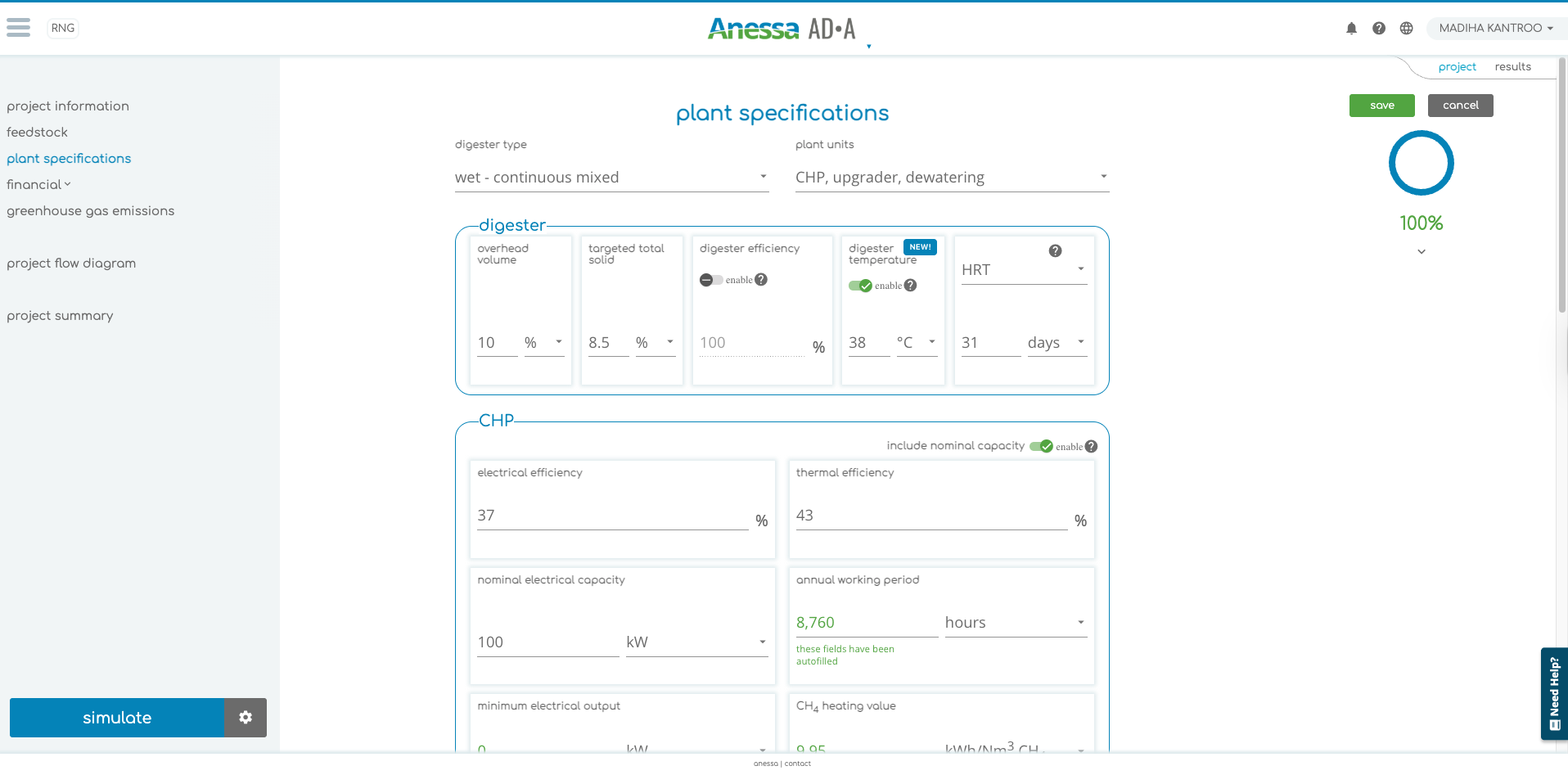
Anessa’s Simulation Software Platform Screenshot
The Monitoring Module provides dynamic digital models of plant processes, helping operators understand how different variables interact within the system
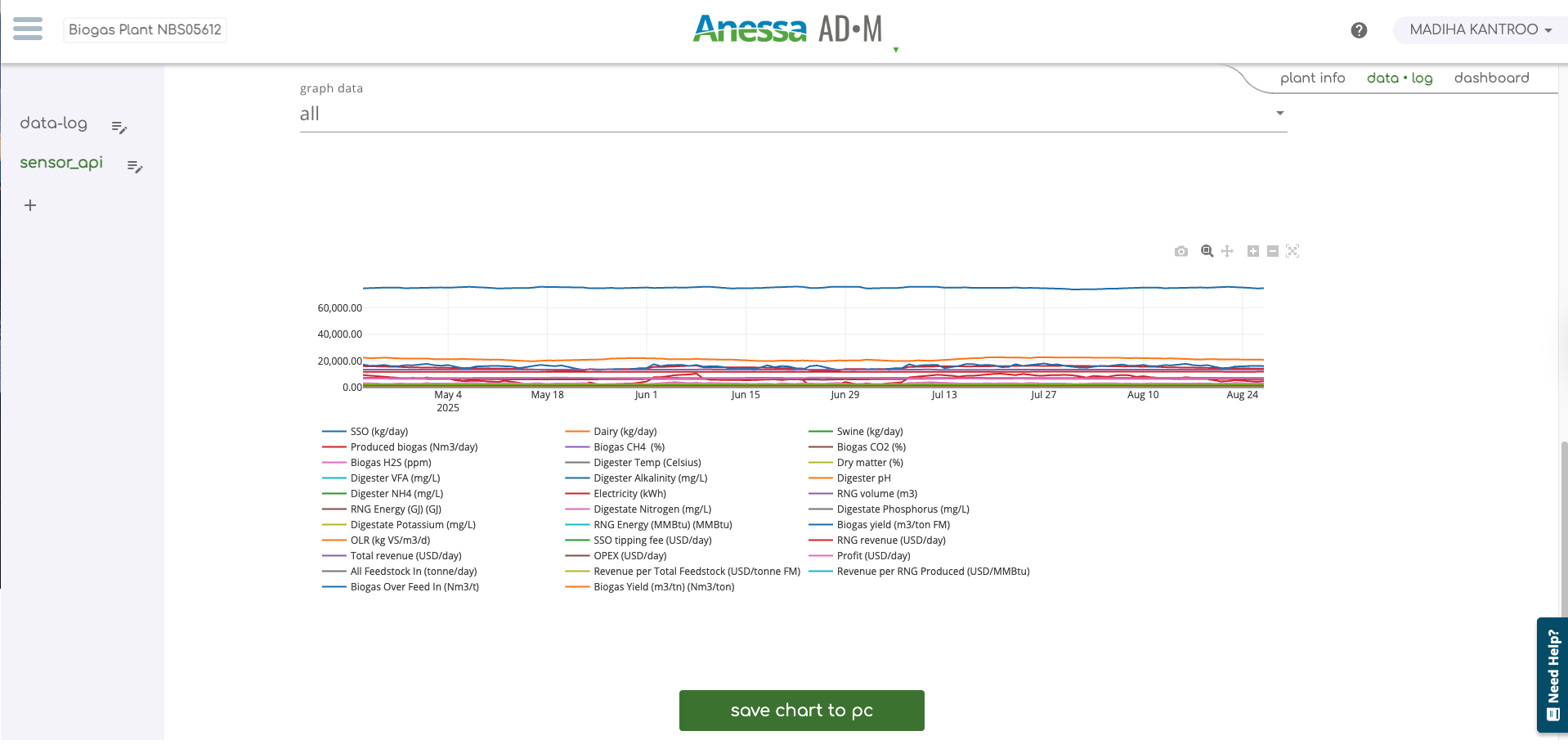
Anessa’s Monitoring Software Platform Screenshot
The Optimization module focuses on operational analytics and monitoring, helping teams identify patterns, detect inefficiencies and make more informed operational decisions.
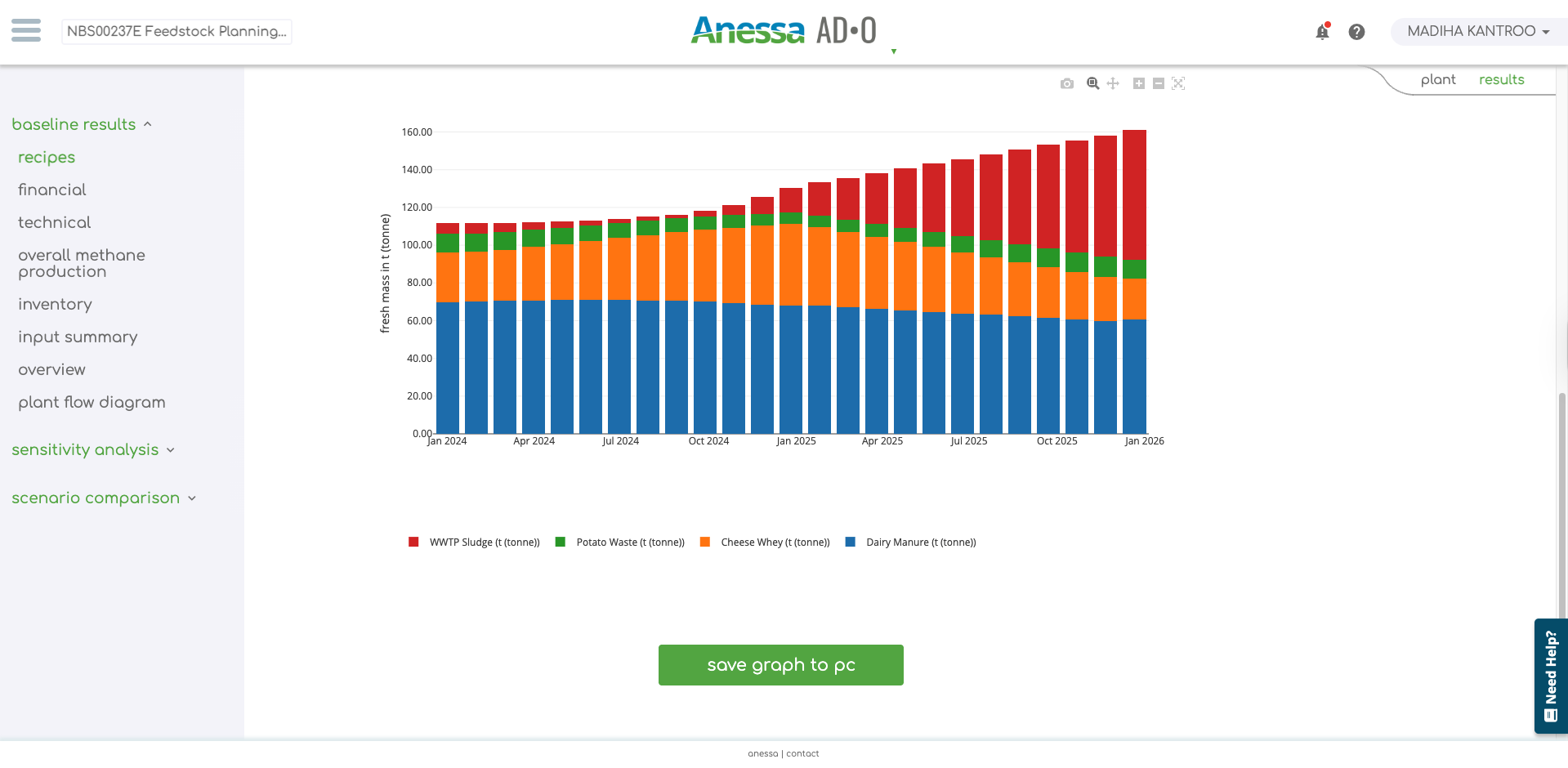
Anessa’s Optimization Software Platform Screenshot
Together, these tools move beyond simple monitoring toward a more comprehensive understanding of plant performance. The aim is not just to show operators what is happening, but to help them understand why it’s happening and what they can do about it.
A Shift the Industry Is Beginning to Embrace
The transition from dashboards to decision intelligence will not happen overnight.
Many plants still rely heavily on traditional monitoring systems, and experienced operators will always remain central to successful plant management.
But the direction of the industry is becoming clearer. As biogas plants grow larger, incorporate more diverse feedstocks (FOGS & organic waste materials) and operate under stricter regulatory frameworks, the complexity of operations will continue to increase.
In that environment, data alone will not be enough.
The plants that perform best in the future will likely be those that combine human expertise with smarter digital tools, allowing operators to make faster, more informed decisions.
From Information to Insight
Ultimately, dashboards were an important first step in the digital evolution of biogas operations.
They gave operators visibility.
But visibility is only part of the story.
What the industry increasingly needs is clarity. Systems that help translate complex data into meaningful insights and practical decisions.
Because in modern plant operations, the real advantage does not come from having more data.
It comes from knowing what that data is telling you.